
Daily auspicious timings
Mạghā's free Pañchāṅga lists favourable windows and times traditionally avoided, calculated for your date and place. Many depend on sunrise and sunset; others follow the Moon's nakṣatra. Read each window's rule and boundaries before applying it.
Daylight from 06:12 to 18:19 divides into 15 muhūrtas of about 48½ minutes; the eighth, 11:51 to 12:40, straddles solar noon at 12:15. The night muhūrtas are about 47½ minutes, and the fourteenth, 04:37 to 05:24, is Brahma Muhūrta.
Last three night muhūrtasSunset · 18:19:37
- Night · 13–15
- Part 13
- 14 · Brahma, 04:37–05:24
- Part 15
- Day · 1–15
- 8 · Abhijit, 11:51–12:40
A muhūrta is one fifteenth of the day or of the night
Muhūrta texts divide the daylight, from sunrise to sunset, into 15 muhūrtas and the night into another 15. A muhūrta lasts 48 minutes only when day and night are equal, so B. V. Raman's Muhurtha tells the reader to find the exact length of each first. On the sample day the Sun rose at 06:12 and set at 18:19, which made each daytime muhūrta about 48½ minutes long and each night muhūrta about 47½.
Two of the favourable windows are single muhūrtas. Abhijit is the eighth of the day, the one that straddles local noon: 11:51 to 12:40 on the sample day. Brahma Muhūrta is the fourteenth of the night, the last but one before sunrise: 04:37 to 05:24 that morning. Both move with your place and date.
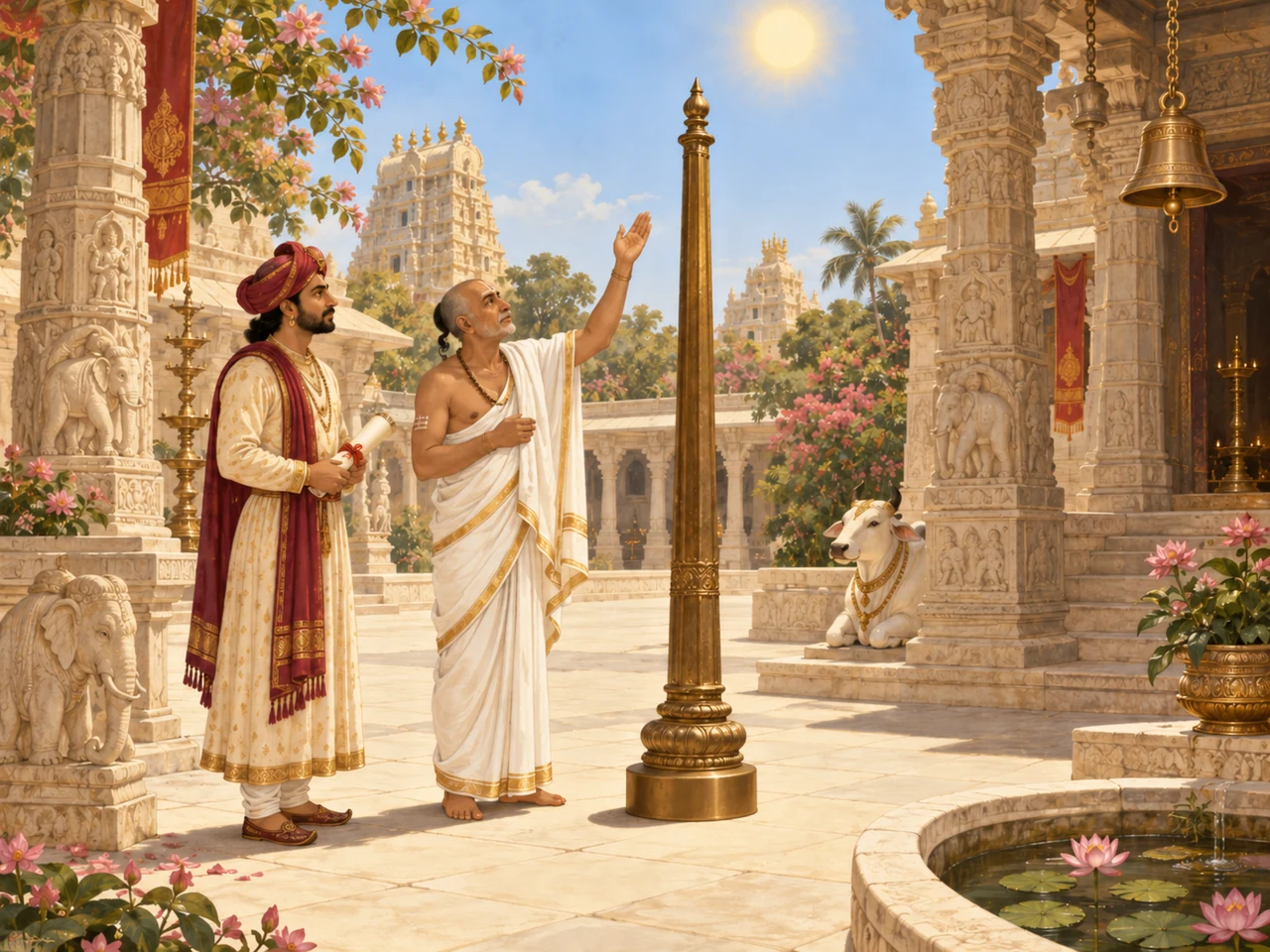
Abhijit Muhūrta holds the middle of the day
Almanacs tie Abhijit to Viṣṇu: a Sanskrit verse calls it his muhūrta, when he takes up his discus and clears away faults. Because the window is centred on solar noon, the way an almanac times sunrise hardly moves it: Mạghā's 11:51 to 12:40 for the sample day matches almanacs that time sunrise differently.
Wednesday is the exception. B. V. Raman's Muhurtha lists Abhijit as Wednesday's Durmuhūrta, a muhūrta to avoid, and many almanacs show no Abhijit that day. Mạghā lists both on Wednesdays, Abhijit among the favourable windows and Durmuhūrta among the avoid windows, though its activity planner never recommends that slot.
Almanacs that give Vijaya Muhūrta, named for victory, usually make it the eleventh daytime muhūrta, three after Abhijit, in the early afternoon.
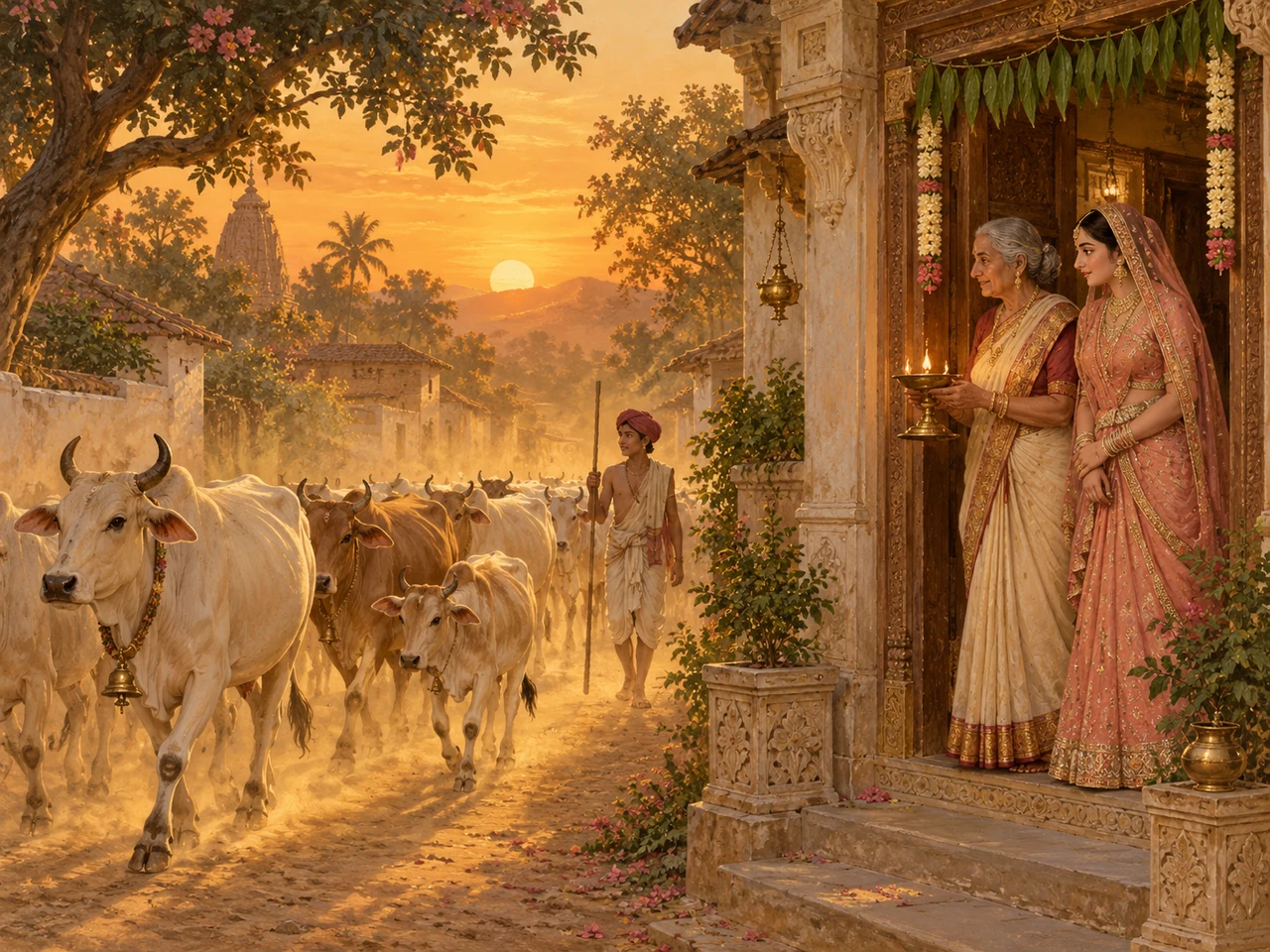
Brahma Muhūrta opens the day and Godhūli closes it
Brahma Muhūrta is traditionally reserved for pre-dawn prayer and study. Mạghā places it from two night muhūrtas before sunrise to one before, about 95–48 minutes ahead in September Bengaluru. Godhūli, the twilight of returning herds, is described as a fallback wedding hour. Mạghā centers it on sunset: one sixtieth of daylight before to one sixtieth of night after, 18:07–18:31 in the sample. Some almanacs begin it at sunset instead.
Amṛta Kālam and Varjyam follow the Moon's nakṣatra
Varjyam and Amṛta Kālam each occupy four ghaṭikās at prescribed offsets within a nakṣatra. Varjyam begins at 50 in Aśvinī or 21 in Hasta; usual tables place Hasta's Amṛta at 45. Modern almanacs scale the complete entry-to-exit span to 60 ghaṭikās, making each window roughly ninety minutes at any day/night hour. Raman's Muhurtha gives the Varjyam table and advises avoiding it invariably.
The weekday fixes Durmuhūrta and the three Kālams
Mạghā's Durmuhūrta indices are Sunday 14; Monday 9/12; Tuesday 4 and night 7; Wednesday 8; Thursday 6/12; Friday 4/9; Saturday 3. Raman's table differs on five weekdays, including Saturday 1/2. Rāhu, Yamagaṇḍa and Gulika each occupy a daylight eighth. On Saturday, Gulika uses the first, Rāhu the third and Yamagaṇḍa the sixth: 06:12–07:43, 09:14–10:44 and 13:46–15:17 in the sample.
Mạghā's Muhurta schedule puts both lists side by side
Muhurta schedule separates favorable and avoid windows, marks NOW, and carries next-day dates after midnight. The same intervals feed the timeline and activity planner. Calculations use Lahiri and centre-of-disc sunrise without refraction.
Current limitations matter: Mạghā scales Varjyam and Amṛta within only the nakṣatra portion inside the sunrise day, rather than its full span. Vijaya duplicates Abhijit's midday interval. These three windows can differ from almanacs by hours.
Brahma Muhūrta runs 04:37 to 05:24 before the 06:12 sunrise, Gulika Kālam 06:12 to 07:43, Rāhu Kālam 09:14 to 10:44, Abhijit 11:51 to 12:40 and Yamagaṇḍa 13:46 to 15:17. No Kālam runs between 10:44 and 13:46.
04:00 ISTSunset · 18:19
- Brahma Muhūrta
- 04:37–05:24
- Gulika Kālam
- 06:12–07:43
- Rāhu Kālam
- 09:14–10:44
- Abhijit Muhūrta
- 11:51–12:40
- Yamagaṇḍa
- 13:46–15:17
On 12 September 2026, Abhijit fell in the gap between Rāhu Kālam and Yamagaṇḍa
Mạghā's prepared sample day is a Saturday in Bengaluru, running from sunrise at 06:12 to the next sunrise. Its sunrise-based windows show how the pieces fit together. Brahma Muhūrta ran from 04:37 to 05:24, before sunrise. Gulika Kālam filled the first eighth of daylight, to 07:43, and Rāhu Kālam the third, from 09:14 to 10:44. Abhijit followed from 11:51 to 12:40, and Yamagaṇḍa came last, from 13:46 to 15:17.
On a Saturday the three Kālams leave the middle of the day free: from 10:44 until 13:46 none of them runs, and Abhijit sits inside that gap. An astrologer would still weigh the day's tithi, nakṣatra and yoga before using it and, for a personal choice, a chart for the proposed moment, which Muhūrta in Mạghā provides.
What people ask about muhūrta timings
What is the Abhijit Muhurat time today?
It is the eighth of the fifteen daytime muhūrtas, so it straddles local noon: from about 24 minutes before solar noon to 24 minutes after, a little longer in summer and shorter in winter. The clock time changes with your place and date, which is why Mạghā asks for a location first. On 12 September 2026 in Bengaluru it ran from 11:51 to 12:40.
How is Brahma Muhurta calculated?
Measure the night from sunset to the next sunrise and divide it by 15. Brahma Muhūrta is the fourteenth part, which ends one night muhūrta before sunrise. With a 12-hour night that is 96 to 48 minutes before sunrise; a longer night moves its start earlier. Many sites simply subtract 96 minutes from sunrise, which comes close near the equinoxes.
What is the difference between Amrit Kalam and Varjyam?
Both are four-ghaṭikā stretches inside the Moon's current nakṣatra, roughly an hour and a half each. Varjyam is the part to avoid for new starts; Amṛta Kālam, the nectar part, is favourable. Each nakṣatra has its own starting count for both, so they fall at different hours every day, unlike Rāhu Kālam, which the weekday fixes. Mạghā's current figures for both can differ from almanacs, as the note above explains.
Why do muhurat timings differ between websites?
Mostly because of sunrise. Mạghā uses the moment the centre of the Sun's disc meets the horizon, without refraction; many sites use the upper edge with refraction, about three and a half minutes earlier in Bengaluru in September. Windows counted from sunrise, such as Rāhu Kālam and Brahma Muhūrta, move by a few minutes, while Abhijit, centred on noon, barely moves. Tables differ too, as Durmuhūrta shows; Mạghā's Varjyam, Amṛta Kālam and Vijaya can differ by hours.
Check today's muhūrtas for your city in Mạghā

Bengaluru, India · Asia/Kolkata
Check daily windows free, without an account. The Bengaluru demo, fixed at noon on 12 September 2026, retains the Varjyam, Amṛta Kālam and Vijaya differences explained above.
See today's muhūrta windows