
Kota Chakra
Kota Chakra arranges 28 nakṣatras, including Abhijit, as four rings of a fort, counted from the birth star. Mạghā draws natal positions, chosen transits or both, allowing you to follow planets through the chakra's rings.
The 28 nakṣatras sit in four square rings, the Bāhya outside, the Prākāra wall, the Durgāntara interior and the Stambha pillars at the centre, seven to each quarter, with entry roads from the corners and exit roads to the sides. Saturn, her Kota Svāmī, stands on the wall in Śatabhiṣā and Mars, her Kota Pāla, on the wall in Puṣya, while the Moon marks Dhaniṣṭhā.
| Star | Planets |
|---|---|
| Dhanishta | Mo |
| Shatabhisha | Sa℞ |
| Bharani | Ke℞ |
| Pushya | Ma |
| Chitra | Su |
| Swati | Me℞ |
| Vishakha | Ju Ve℞ Ra℞ |
Janma: Dhaniṣṭhā, pada 1. Kota Svāmī: Saturn. Kota Pāla: Mars.
Each side of the fort has an entry road and an exit road
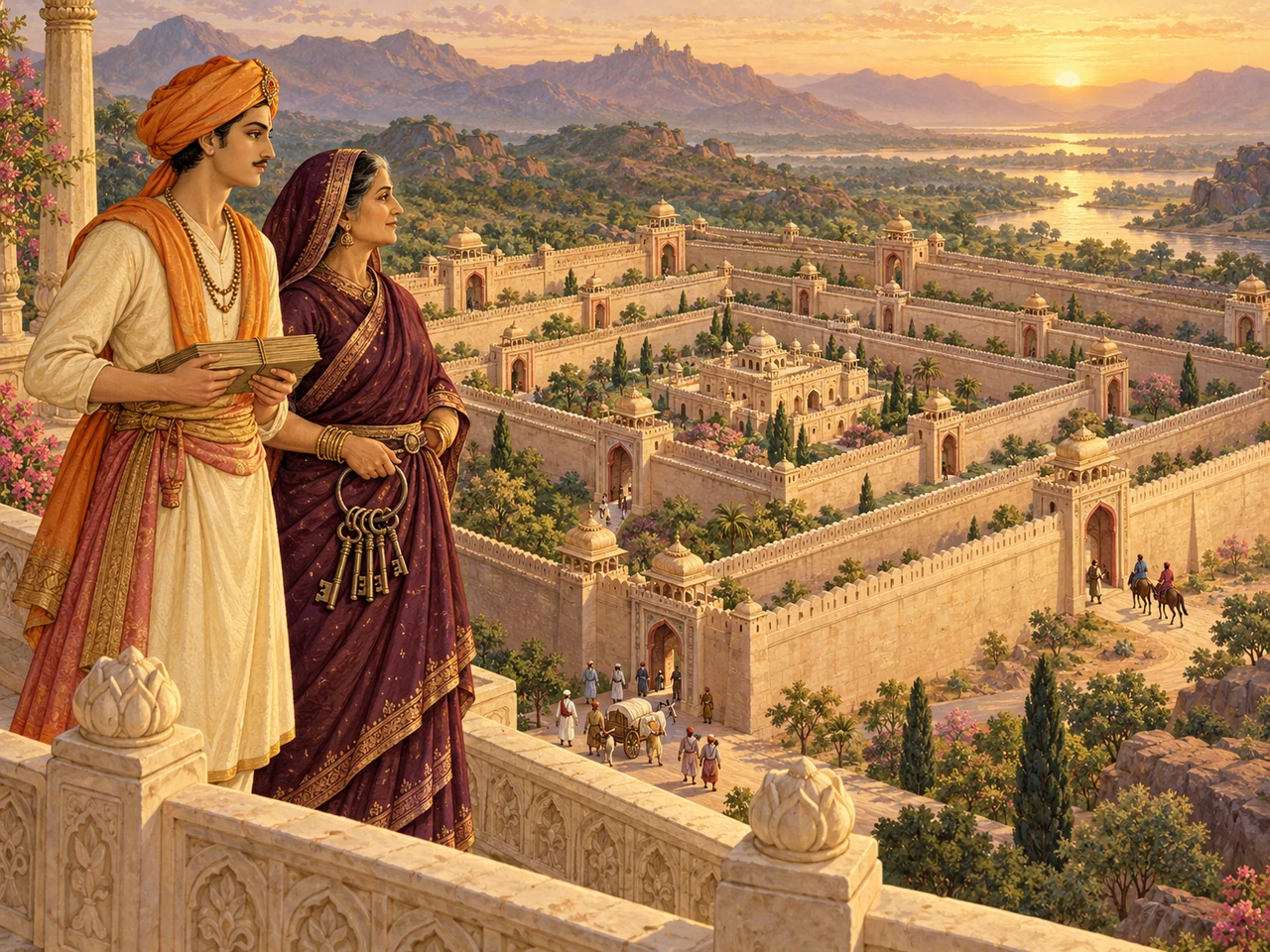
Narapati's 12th-century Narapatijayacaryā lays the chakra out for a siege, counting from the nakṣatra of the fort's name. For a birth chart the count begins at the birth star, set in the north-east corner with East at the top. From each corner three stars run inward along an entry road to a pillar, and three run back out along an exit road to the middle of a side, seven stars to each quarter.
Nila Raman, has the Moon in the first quarter of Dhaniṣṭhā, so Dhaniṣṭhā takes the corner. The Moon's sign, Capricorn, makes Saturn her Kota Svāmī, and the Avakahaḍā table of birth-star quarters makes Mars her Kota Pāla. In Mạghā's drawing of her birth chart both stand on the wall: Saturn, retrograde, in Śatabhiṣā and Mars in Puṣya.
Malefics entering the fort are the warning sign
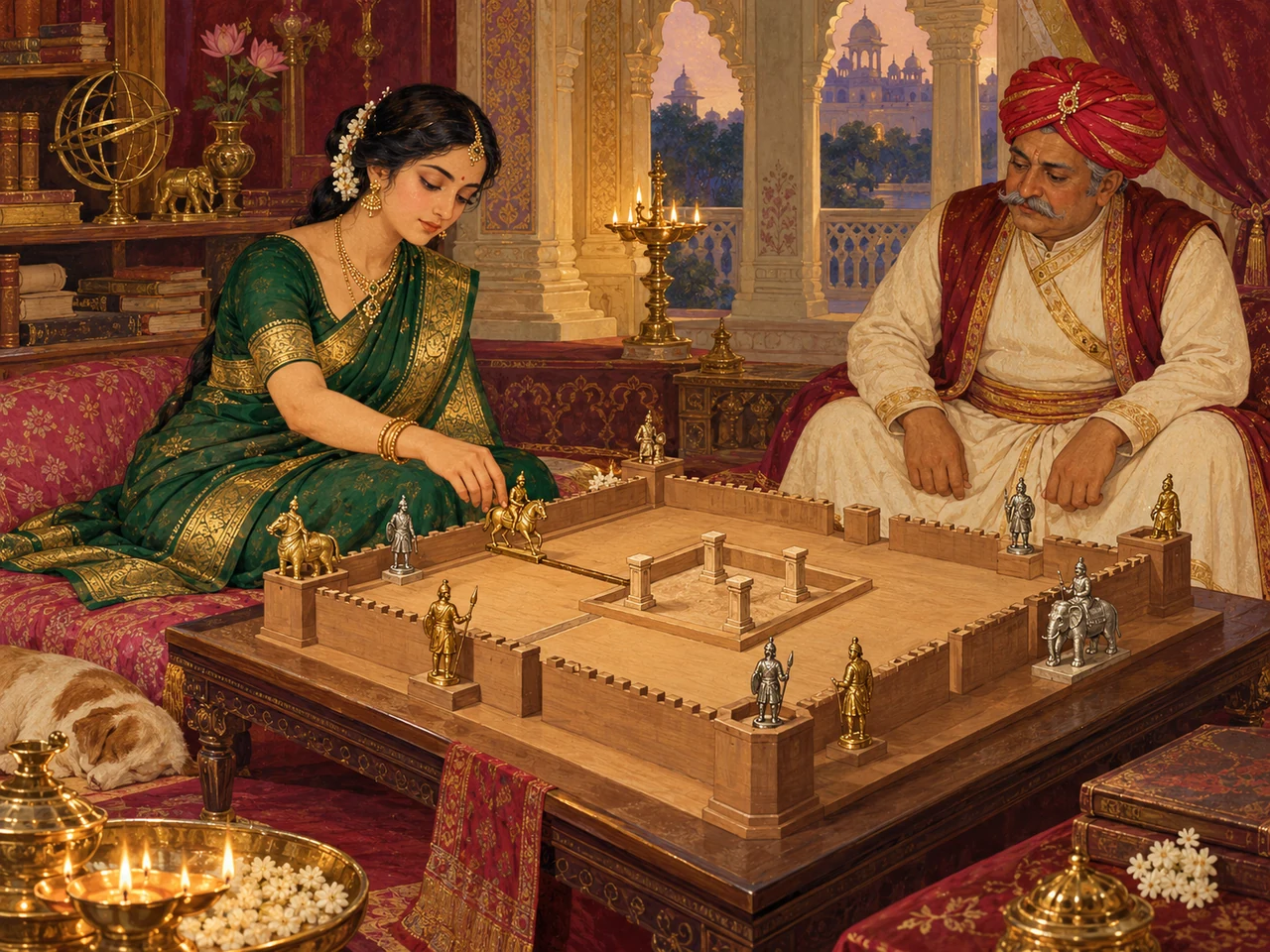
Narapati's siege reading contrasts malefics inside a fort with benefics protecting it. Modern Kota writers apply that model to personal difficulties, checking running daśās alongside transits. Entry roads and pillars indicate pressure; exit roads indicate release. In the frozen 12 September 2026 sample, retrograde Rāhu leaves through Nila's birth star on the outer ground, while retrograde Saturn heads toward a pillar from Revatī. No planet occupies a pillar.
Birth planets and transits in Kota
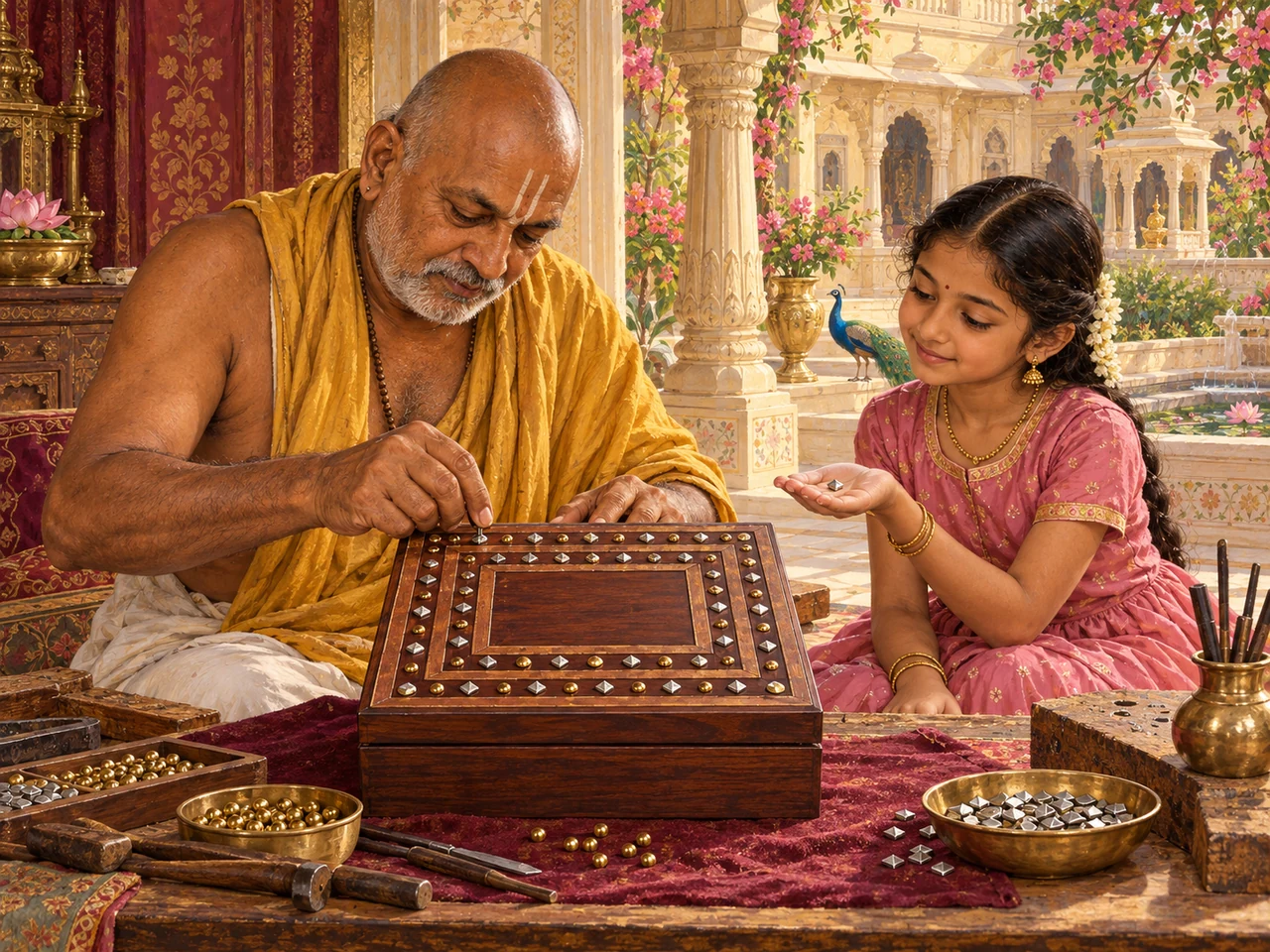
Choose Kota in a chart’s Transits tab, then Natal, Transit or Both. Circles mark birth positions, diamonds transits and ℞ retrograde motion. Select a nakṣatra for its zone, road and planetary degrees; All placements lists all 28, and Expand enlarges the fort. Positions are sidereal.
Note: Mạghā mirrors exit roads on entry roads, giving eight stars to each outer ring. Narapati’s different exit-road list puts twelve stars outside the walls.
Questions about the Kota Chakra
What is the Kota Chakra used for in astrology?
It shows transiting planets entering or leaving a fort built from the birth star. Narapati used the chakra for battles and sieges. Modern astrologers, K. K. Joshi among them, apply it to periods of illness, disputes and other trouble. A transit through the fort is read with the running daśā; on its own it does not decide an event.
What are Kota Svāmī and Kota Pāla?
In later Kota writing, the Kota Svāmī, lord of the fort, is the ruler of the Moon's sign at birth. The Kota Pāla, its guard, comes from the quarter of the birth star: each quarter has a syllable in the Avakahaḍā table, and the planet ruling that syllable's letter group guards the fort. Some writers take the birth star's own lord instead. For Nila Raman both rules give Mars, and Saturn is her Kota Svāmī.
Why does a retrograde planet change direction in the Kota Chakra?
Modern Kota writers treat a retrograde planet as walking its road backwards, so on an entry road it is leaving and on an exit road it is coming in. Rāhu and Ketu always move backwards, so they always take the reverse road, and a planet on a pillar stays where it is. Mạghā follows this convention for natal and transit positions alike.
Open the Kota Chakra on your own chart
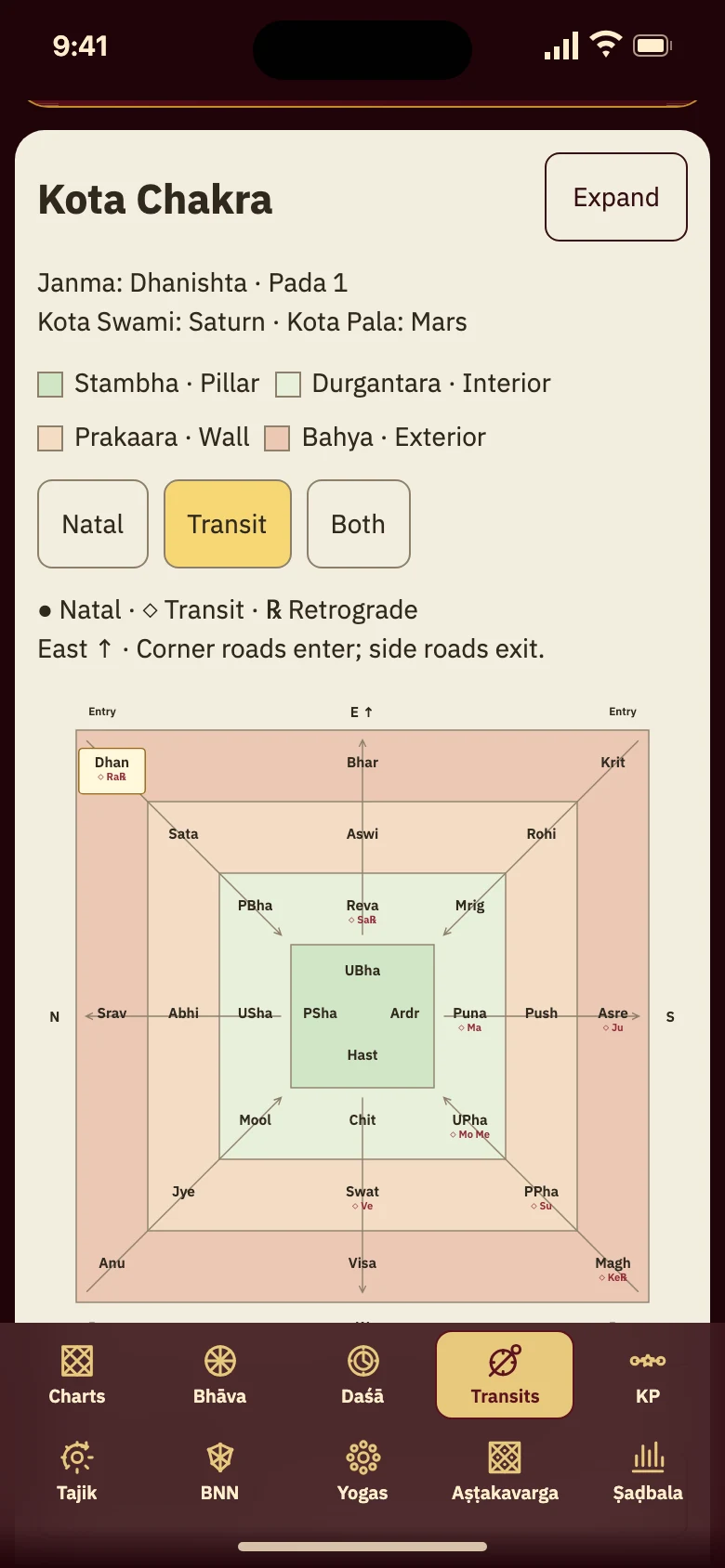
Kota is free in the Transits tab of every chart you save. The preview opens it for Nila Raman, with transits frozen at noon on 12 September 2026 in Bengaluru.
Open your Kota Chakra