


Yogārdha Daśā
Yogārdha Daśā is an experimental sign-based timing system in Mạghā. Select Yogardha to inspect its dated periods beside a saved birth chart. The worked timeline preserves Nila Raman's sequence without equating it to other daśā methods.
Nila Raman’s saved Yogārdha Daśā sequence, frozen on 12 September 2026: Libra 12 years, Scorpio 8 years, Sagittarius 10 years, Capricorn 1 years, Aquarius 8 years, Pisces 7 years, Aries 3 years, Taurus 5 years, Gemini 4 years, Cancer 6 years, Leo 1 years, Virgo 1 years. Saved example only; no independent calculation or accuracy certification.
Birth marker · 14 Oct 1994
- 01Libra14 Oct 1994 →
14 Oct 2006 - 02Scorpio14 Oct 2006 →
14 Oct 2014 - 03Sagittarius14 Oct 2014 →
13 Oct 2024 - 04Capricorn13 Oct 2024 →
13 Oct 2025 - 05Aquarius13 Oct 2025 →
14 Oct 2033 - 06Pisces14 Oct 2033 →
13 Oct 2040 - 07Aries13 Oct 2040 →
14 Oct 2043 - 08Taurus14 Oct 2043 →
13 Oct 2048 - 09Gemini13 Oct 2048 →
13 Oct 2052 - 10Cancer13 Oct 2052 →
14 Oct 2058 - 11Leo14 Oct 2058 →
14 Oct 2059 - 12Virgo14 Oct 2059 →
13 Oct 2060
Widths follow the saved duration in days. Dates are shown in UTC. Gold marks the current period.
Libra opens the saved example
Nila’s prepared Yogārdha sequence begins with twelve years of Libra. Scorpio follows for eight years, Sagittarius for ten, and Capricorn for one. Aquarius then runs from October 2025 to October 2033 in this sample.
The diagram places those intervals in the full first sequence. Long and short periods are easier to distinguish when their widths reflect the recorded durations. Use the dates to locate an interval before looking at its subdivisions. These are the saved example’s values, not a claim that all charts have the same starting sign or sequence.

Compare timelines with a clear question
A useful comparison begins with one question and one chart. Locate the interval you want to study in Yogārdha, then note how another timing system organises the same years. Agreement or difference is something to examine in context, not a prediction by itself.
Keep the broad sign period visible when considering a shorter interval. The timing view should accompany a reading of the chart and the method you follow. Its presence in the picker does not establish classical certification or promise a particular life event.
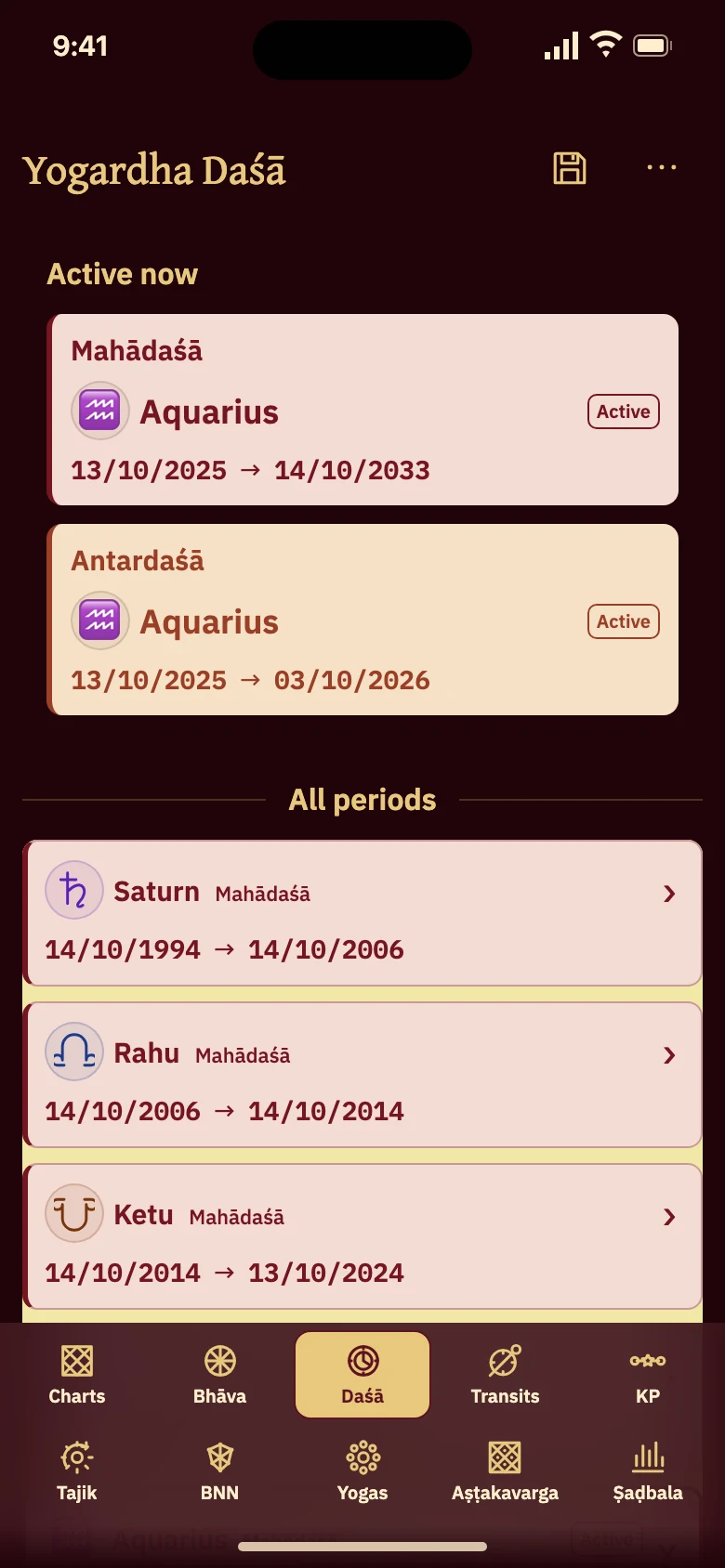
Choose Yogardha in the real reader
Open Daśā on your saved chart, open the options menu and choose Experimental, then Yogardha. The reader lists dated periods and lets you expand the available sub-periods. This preview takes that path with Nila’s chart.
Note: Yogardha is experimental. Treat the sample as a demonstration of the available view, with its fixed dates and actual labels. For a personal enquiry, first choose the correct saved chart in the app and retain the system name with your notes.
Questions about Yogārdha Daśā
Where is Yogardha listed?
It is in the Experimental group of the chart’s Daśā options.
Does every chart begin with Libra?
No. Libra is the first sign in the saved Nila example shown here. The page does not assign that start to every chart.
Can I compare it with Chara?
Yes. Open the same saved chart and select each named system in turn. Keep their methods and period dates distinct when making the comparison.
Does the preview predict an event?
No. It demonstrates a fixed timeline and the actual app reader. A period boundary is not a guarantee of an event or its date.
Explore Yogārdha Daśā on your chart
This real walkthrough opens Experimental and selects Yogardha on Nila Raman’s fixed chart. It preserves the app’s displayed labels and periods; visitors cannot enter their own birth details here.
Open your charts