


Āyu Daśā
Āyu Daśā is Mạghā's experimental longevity-associated period system, labelled Aayu in the picker. Inspect its planetary periods and dated subdivisions alongside a birth chart. These intervals do not establish how long anyone will live.
Saved main periods for Nila Raman’s chart at 12 September 2026. All 9 main periods are shown with their recorded lengths. The birth marker and current highlight follow the saved fixture.
Birth marker · 14 Oct 1994
- 01Mars20 Apr 1994 →
20 Apr 2001 - 02Moon20 Apr 2001 →
20 Apr 2011 - 03Sun20 Apr 2011 →
20 Apr 2017 - 04Rahu20 Apr 2017 →
21 Apr 2035 - 05Ketu21 Apr 2035 →
20 Apr 2042 - 06Saturn20 Apr 2042 →
20 Apr 2061 - 07Venus20 Apr 2061 →
20 Apr 2081 - 08Jupiter20 Apr 2081 →
20 Apr 2097 - 09Mercury20 Apr 2097 →
22 Apr 2114
Widths follow the saved duration in days. Dates are shown in UTC. Gold marks the current period.
The saved sequence begins with Mars
Nila’s saved list opens with a seven-year Mars main period in April 1994, before her birth. The Moon follows in April 2001 and the Sun in April 2011. Rāhu runs from April 2017 to April 2035, so it is the main period containing the sample date, 12 September 2026.
The diagram draws all nine saved main periods, with their lengths taken directly from the fixture. They continue through Ketu, Saturn, Venus, Jupiter and Mercury. The birth marker distinguishes the start of the saved first period from Nila’s actual birth date; the highlighted bar marks the reference date.

Keep longevity study separate from lifespan claims
Āyu means life or lifespan, and longevity-based daśās belong to a wider field of astrological study. A list of dates alone does not establish a lifespan. Read the named method and its assumptions before treating any period as a longevity judgment.
For this guide, the supported demonstration is concrete: choose Aayu, inspect its planetary sequence and open the dated rows. It does not demonstrate a haraṇa worksheet, individual longevity contributions or a comparison with another school’s calculations.
You can compare the saved dates with Vimśottarī while keeping each system’s name attached to its periods. The chart and the selected daśā remain the basis of the reading; the embedded sample supplies no personal interpretation.

Open Aayu under Experimental
From your chart’s Daśā card, open the options menu, choose Experimental and select Aayu. In the phone view, the active period summary sits above the expandable period list. The real capture shown here uses the bundled Nila sample at the fixed September 2026 date.
Experimental in Mạghā means this option is presented for further study rather than as a certified match to every reference method. The preview demonstrates the selected period screen; it does not expose a choice among Piṇḍāyu, Aṁśāyu or Nisargāyu methods, or a control for longevity reductions.
Note: The Āyu period list is not a lifespan estimate. This guide makes no claim that its dates establish a longevity result.
Questions about Āyu Daśā
Where is Āyu Daśā in the app?
On a saved chart, open the Daśā options, choose Experimental and select Aayu. The spelling in the picker differs from the diacritics used in this guide.
Does this preview calculate my lifespan?
No. It shows Nila Raman’s chart and a saved planetary period list. It accepts no personal birth details and provides no lifespan estimate.
Can I change the longevity method in this preview?
The demonstrated control selects Aayu. The preview does not demonstrate separate Piṇḍāyu, Aṁśāyu or Nisargāyu settings, or a switch for haraṇas.
Choose Āyu Daśā on your chart
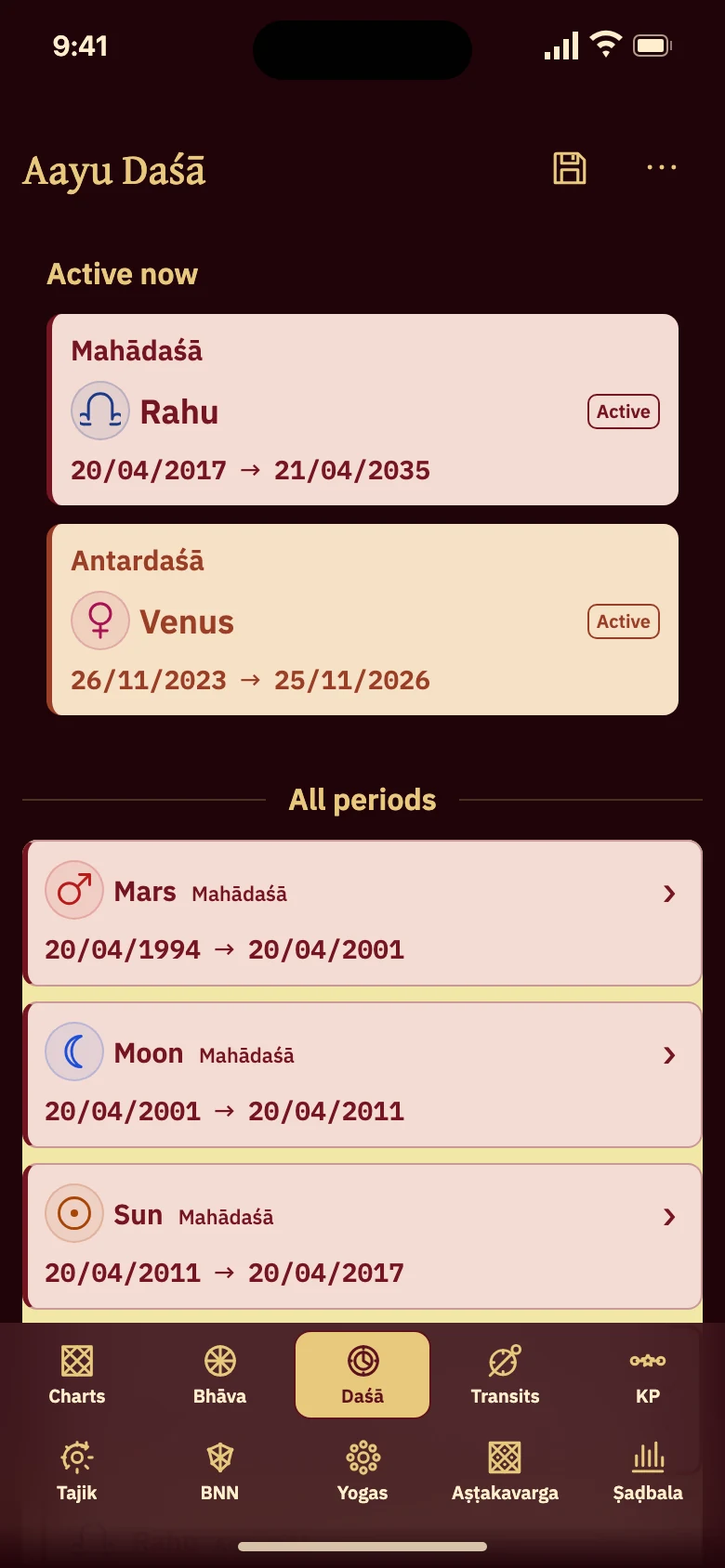
Open Aayu on a chart you save in Mạghā. Astrology features are free for life. This phone-layout preview, also used on desktop, selects the real system on Nila Raman’s chart at a fixed date.
Open your daśā periods