

Navatāra
Navatāra groups 27 nakṣatras into three rounds of nine, counted from a reference star. Mạghā lists each planet's tārā, distance, lord and tone. Use the birth Moon or another chosen reference to compare the same placements.
Sampat means gain and Vipat danger after each Janma star
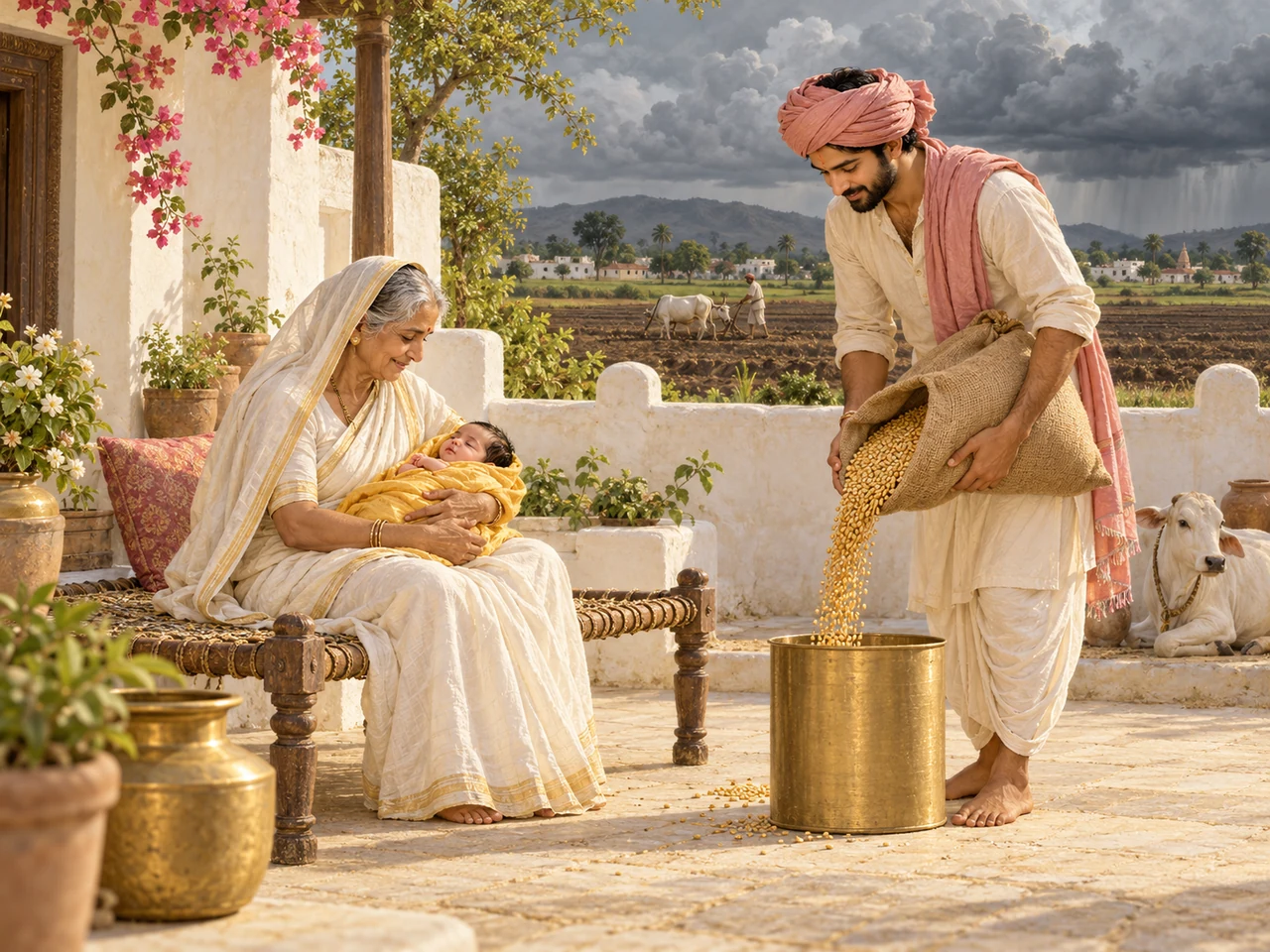
Janma, the birth star, cuts both ways. Raman reads it as danger to the body and calls a day on one's own birth star ordinarily unfavourable, yet favourable without exception for events such as a child's first feeding, the sacred-thread ceremony, farming and buying land, and inauspicious for travel, medical treatment and marriage. Mạghā tags Janma Mixed.
Sampat, the second star, means wealth, and Raman reads it as wealth and prosperity; Mạghā tags it Supportive. Vipat, the third, means misfortune: dangers, losses and accidents in Raman's reading. Mạghā tags it Caution. Muhūrta Cintāmaṇi suggests a gift of jaggery when a Vipat day cannot be avoided, and of vegetables on a Janma day.
Pratyak sits between two supportive stars in the middle triad
Kṣema, the fourth star, means well-being, and Raman reads it as prosperity. Pratyak, the fifth, also called Pratyari, the adversary, brings obstacles in Raman's reading, and Muhūrta Cintāmaṇi suggests a gift of salt when its day must be used. Sādhana, the sixth, called Sādhaka in Muhūrta Cintāmaṇi, means accomplishment; Raman reads it as the realisation of ambitions.
Mạghā tags Kṣema and Sādhana Supportive and Pratyak Caution. In Nila's chart this triad holds a single planet: Mars in Puṣya, her 13th star, which falls in Kṣema in the second round. Counted from her Moon, Revatī, Āśleṣā and Jyeṣṭhā are her Pratyak stars, and Aśvinī, Maghā and Mūla her Sādhana stars.

Naidhana counts as the hardest tārā, and two friendly stars close the round
Naidhana, the seventh star, takes its name from death; Muhūrta Cintāmaṇi calls it Vadha, slaying, and Raman reads it simply as dangers. Many astrologers treat it as the hardest of the nine, and Muhūrta Cintāmaṇi's remedy for it is a gift of gold with sesame. Mạghā tags it Caution. Nila's Ketu sits in Bharaṇī, her 7th star.
Mitra, the eighth, is the friend, which Raman calls good, and Parama Mitra, the ninth, is the great friend, which he calls very favourable; Muhūrta Cintāmaṇi names it Atimaitra. Mạghā tags both Supportive. For Nila the Mitra stars are Kṛttikā, Uttara Phalgunī and Uttarāṣāḍhā, and the Parama Mitra stars Rohiṇī, Hasta and Śravaṇa, none of them occupied.

Muhūrta texts read the day's star against the birth star
Raman makes tārā bala, the strength of the day's star, one of three checks common to almost every election, with Chandra bala and Pañchaka. Count from the birth star to the star of the day: days on the 1st, 3rd, 5th and 7th stars are best avoided, although when a day is otherwise good and the work cannot wait, he would avoid only the opening ghaṭīs of those stars.
Muhūrta Cintāmaṇi grades the harm by round. In the first nine stars, Vipat, Pratyari and Vadha harm throughout; in the second round only a third of each star is avoided, and in the third they do no harm. Many astrologers also apply the count to the planets of a birth chart, which is what Mạghā's tab does.
Mạghā counts the tārās from any of ten points in any divisional chart
Navatara lists ten reference points with sign, degree, nakṣatra/pada, distance, tārā, lord and tone. Choose Moon, Lagna or another graha as reference, and any division through D300. Tara Lord uses the Vimśottarī ruler shared by that tārā's three stars.
Mạghā repeats the same tone across all three rounds. Thus Nila's Viśākhā planets read Caution as Vipat, although Muhūrta Cintāmaṇi's daily-star rule lifts that harm in the third round.
See the tārā of every planet in your chart

The Navatara tab is free for every chart you save. The preview opens it for Nila Raman, counted from her Moon in Dhaniṣṭhā in the birth chart (D1).
Open your charts