
Muhurta
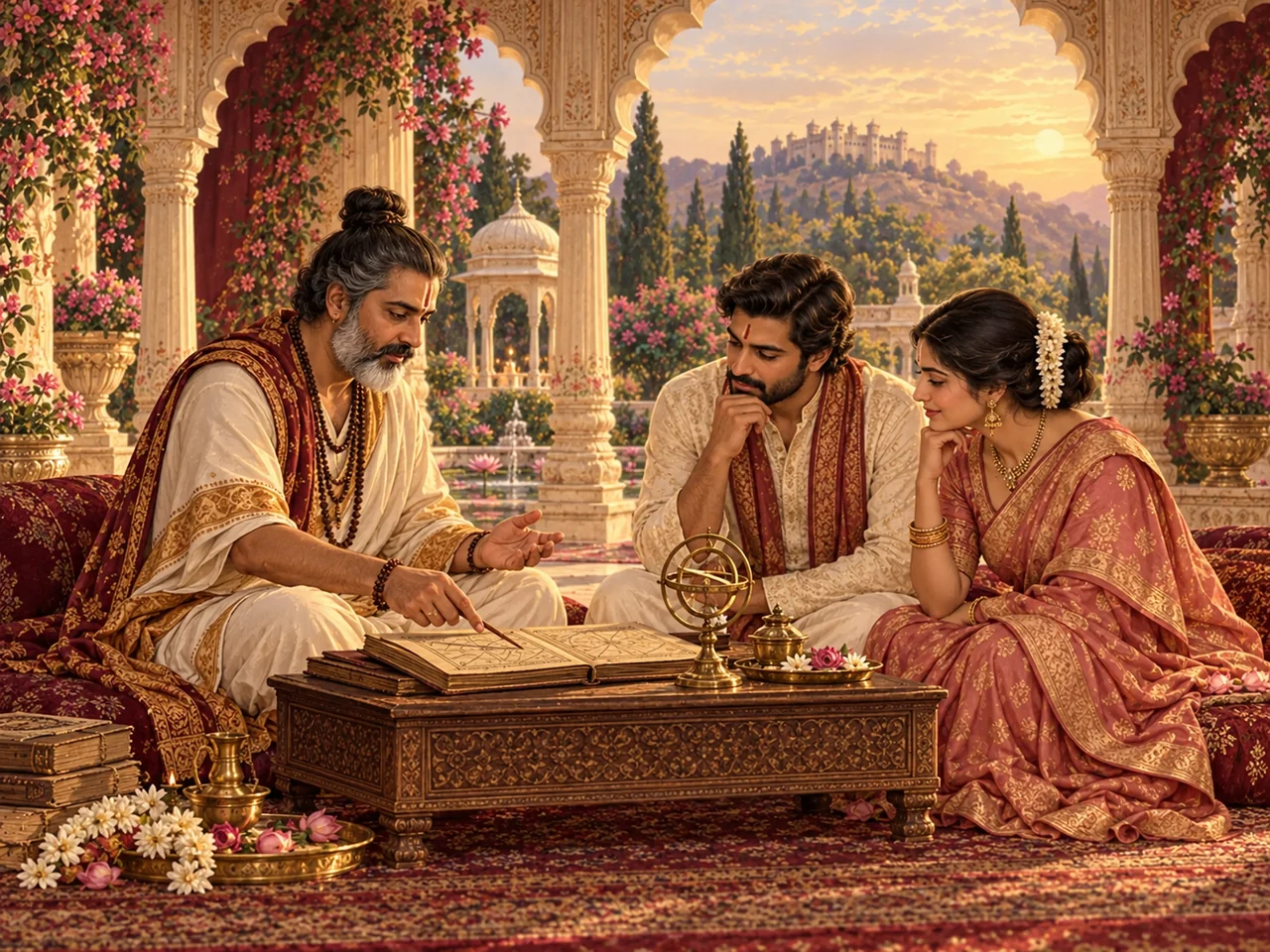
Muhurta is the Jyotisha practice of examining a proposed time for an event. Create a chart for its date, time and place, then compare the Panchanga, Moon, rising sign and planets relevant to the occasion.
The Panchanga and the event chart describe the same chosen moment.
- The proposed momentDate · Time · Place
- Five limbs of PanchangaTithi · Vara · NakshatraYoga · Karana
- The event chartLagna · Moon · Relevant houses
What goes into a Muhurta?
Begin with the five limbs of the Panchanga, then read the chart of the moment.
- Tithi · lunar day
- The Sun–Moon separation, divided into steps of 12 degrees. It places the moment within the waxing or waning lunar fortnight.
- Vara · weekday
- The day and its traditional planetary ruler, considered with the local day timings.
- Nakshatra · lunar mansion
- The Moon's position among 27 divisions of the sidereal zodiac.
- Yoga · Sun–Moon measure
- One of 27 divisions formed from the combined longitudes of the Sun and Moon. Here, yoga means a Panchanga factor.
- Karana · half of a tithi
- A smaller division of the Sun–Moon separation, useful for examining the chosen part of the lunar day.
The Panchanga describes the chosen moment through five linked measures. Each contributes a different part of the traditional timing assessment.
These five factors are a starting point. The Lagna, its ruler, the Moon's condition, the relevant houses and the local timing intervals also enter the reading. A favourable label on its own does not settle the choice of a moment.
Why the chosen moment matters
An event's purpose guides which houses, planets and timing factors receive attention. A date alone is insufficient: the rising sign and Panchanga factors change through the day. Save the exact place and time to compare candidate moments.
These are traditional astrological considerations. They do not guarantee an outcome; preparation and practical circumstances still matter.
How is a Muhurta chart calculated?
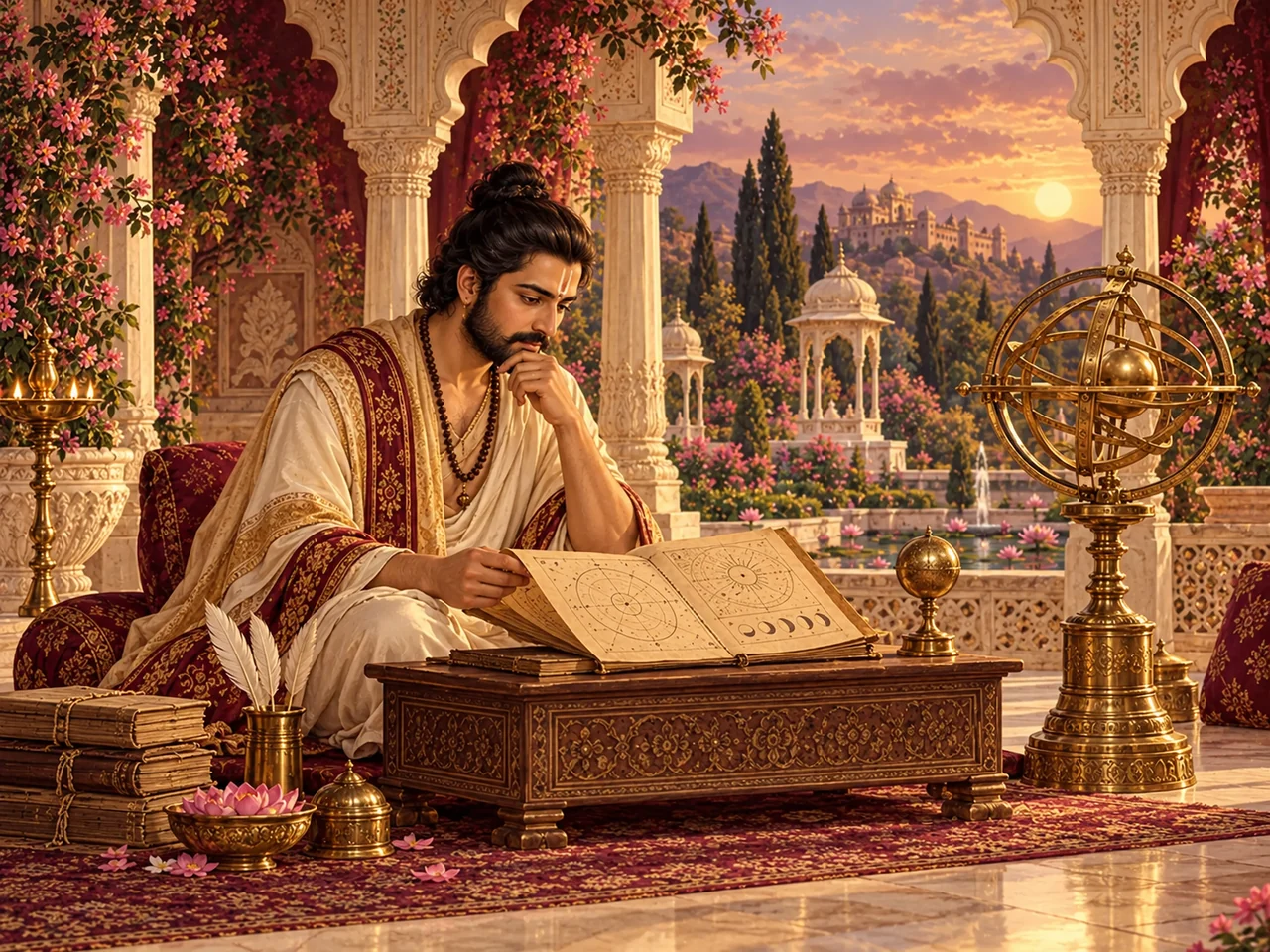
The event's date, time, timezone and location establish the instant, planetary positions, rising sign and houses. Local sunrise determines the relevant daily timings.
The Sun and Moon supply Tithi, Nakshatra, Yoga and Karana. Mạghā shows the Panchanga beside the event's D1 chart, with D3 and D9 for further study. Save named candidates for comparison; the final Muhurta judgment remains with the reader.
Questions about Muhurta
The calculation, step by step
- Resolve the event's local date, time, place and timezone to an instant.
- Calculate planetary longitudes and apply the selected zodiac/ayanamsha settings.
- Determine the Lagna and houses using the instant, location and selected house conventions.
- Derive the Panchanga factors and their transition times; calculate local sunrise, sunset and the relevant timing intervals.
- Display the event chart and its supported divisional views for interpretation.
Does Mạghā automatically find the best time?
The current Muhurta feature lets you examine a proposed moment and keep candidates for comparison. An automatic search that chooses times by activity type is not part of this workflow.
Is this the same as a birth chart?
A birth chart uses the moment and place of birth. A Muhurta chart uses the proposed beginning of an event. Its D1, D3 and D9 views are calculated from that event moment.
Create the Muhurta

Bengaluru, India · Asia/Kolkata
Save a proposed event time and compare its chart, Panchanga and divisional views. The demo uses a prepared example.
Create the Muhurta