
KP Daśā, Bhukti and Antara
KP reads Vimśottarī through nested Daśā, Bhukti and Antara periods. Mạghā shows the lords running at a selected date and the houses they signify, using Krishnamurti ayanāṁśa. The dates can differ from a Lahiri-based Vimśottarī calculation.
Each bhukti and antara is a fixed share of the period above it
The nine lords run in a fixed order over 120 years: Ketu 7 years, Venus 20, Sun 6, Moon 10, Mars 7, Rāhu 18, Jupiter 16, Saturn 19 and Mercury 17. The Moon's nakṣatra at birth picks the first daśā, and the share of that star the Moon has already crossed sets how much of the period remains.
Each daśā divides into nine bhuktis in the same order, starting with its own lord; a bhukti lasts the daśā's years times its lord's years, divided by 120. Each bhukti divides into nine antaras in the same proportions.
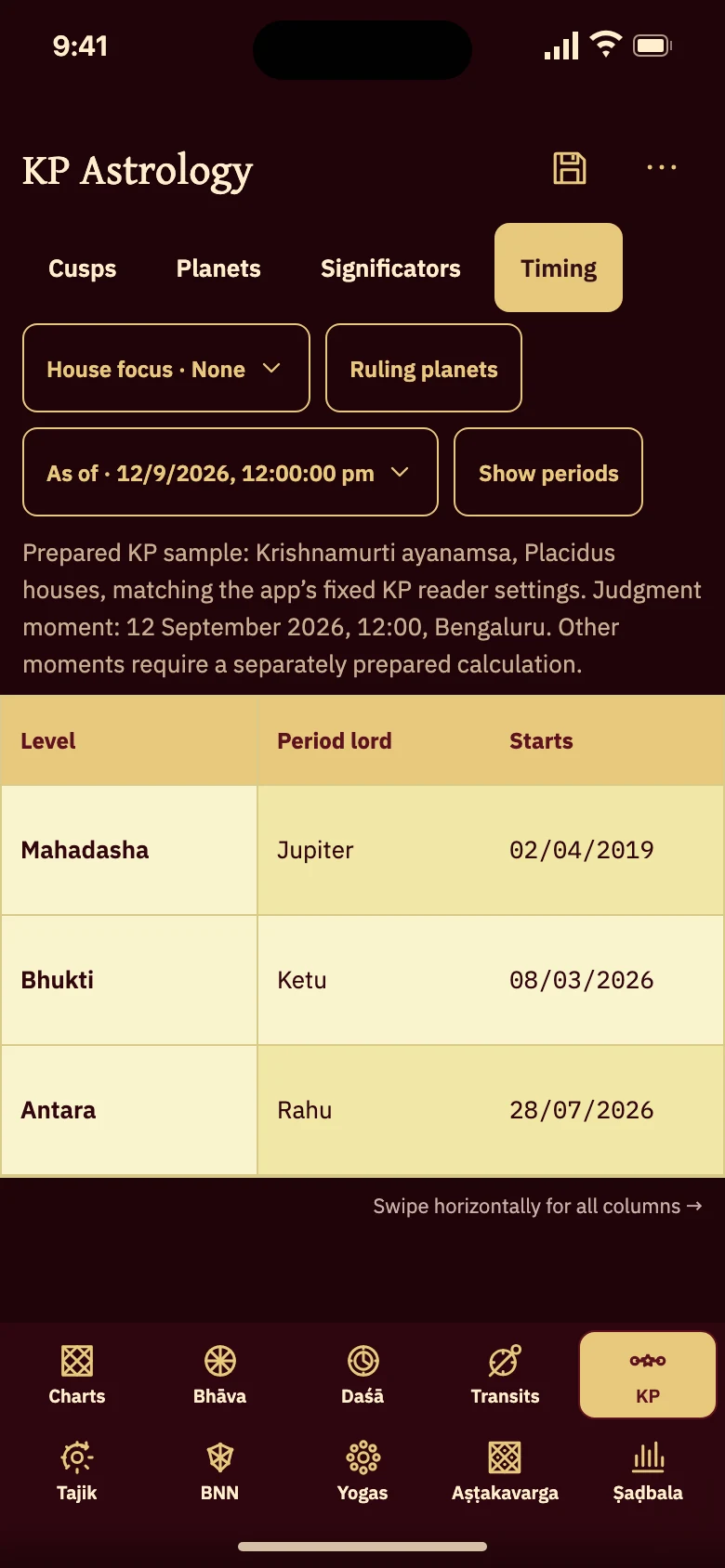
At noon on 12 September 2026 Nila Raman is in her Jupiter daśā, Ketu bhukti and Rāhu antara. The Ketu bhukti lasts 16 × 7 ÷ 120 = 0.93 years, and the Rāhu antara inside it about 51 days.
KP expects an event in the joint period of its significators
Krishnamurti's readers time an event by first naming the houses it needs, for marriage the 2nd, 7th and 11th, and the planets that signify them. The matter is expected in the conjoined period of those significators, when the daśā, bhukti and antara lords all signify the houses concerned. The antara narrows the window to a span of days to months.
When too many planets qualify, he keeps the ones that are also ruling planets at the moment of judgment, then fixes the day by a transit, usually of the Sun, or of the Moon for results due within a month. In one marriage case in his fourth reader, he names Venus daśā, Venus bhukti and Mercury antara, then goes a level deeper, to the sūkṣma.
Mạghā shows the KP periods running on any date
KP's Timing view shows dated daśā, bhukti and antara for the chosen As of moment, with classic house significations and House Focus highlights. It uses Krishnamurti ayanāṁśa, Placidus and 365.2564-day years. The separate Daśā card follows your Calculation defaults, normally Lahiri, so its schedule can differ. Nila's KP periods begin about nineteen days earlier than the Lahiri card's periods.
What people ask about KP daśā periods
Which daśā system does KP use?
Only Vimśottarī. KP divides each nakṣatra into nine subs in the proportions of the Vimśottarī periods, so the same nine lords that rule the star and sub of every cusp and planet also run the periods that time events. Other daśā systems play no part in the method.
What is the difference between bhukti and antara?
Bhukti is another name for the second level, the antardaśā; antara is the third, the pratyantardaśā. A Jupiter daśā holds nine bhuktis, from about 9½ months for the Sun to 2⅔ years for Venus, and each bhukti holds nine antaras. KP goes a level further, the sūkṣma, for finer timing; Mạghā's KP tab shows the first three levels.
Why are KP daśā dates different from Lahiri dates?
The Moon is measured from a different starting point. Krishnamurti's ayanāṁśa is about 6′ smaller than Lahiri's, so the KP Moon sits slightly further into its nakṣatra and less of the first period remains at birth. Every later date moves earlier by the same amount, about two to eight weeks depending on the period running at birth. For Nila it is about 19 days.
How do I find the daśā, bhukti and antara for a date?
In Mạghā, open the chart's KP tab, choose Timing, set the date and time under As of and press Show periods; the three running lords appear with their dates and the houses each signifies. By hand, find the balance of the first daśā from the Moon at birth, add the daśās in order, then divide the running one into bhuktis and antaras.
Check your KP periods in Mạghā
Bengaluru, India · Asia/Kolkata
Read KP periods for a chosen date. The chart shows Jupiter–Ketu–Rāhu at noon on 12 September 2026, with start dates, using Krishnamurti ayanāṁśa and Placidus houses.
Open your charts